

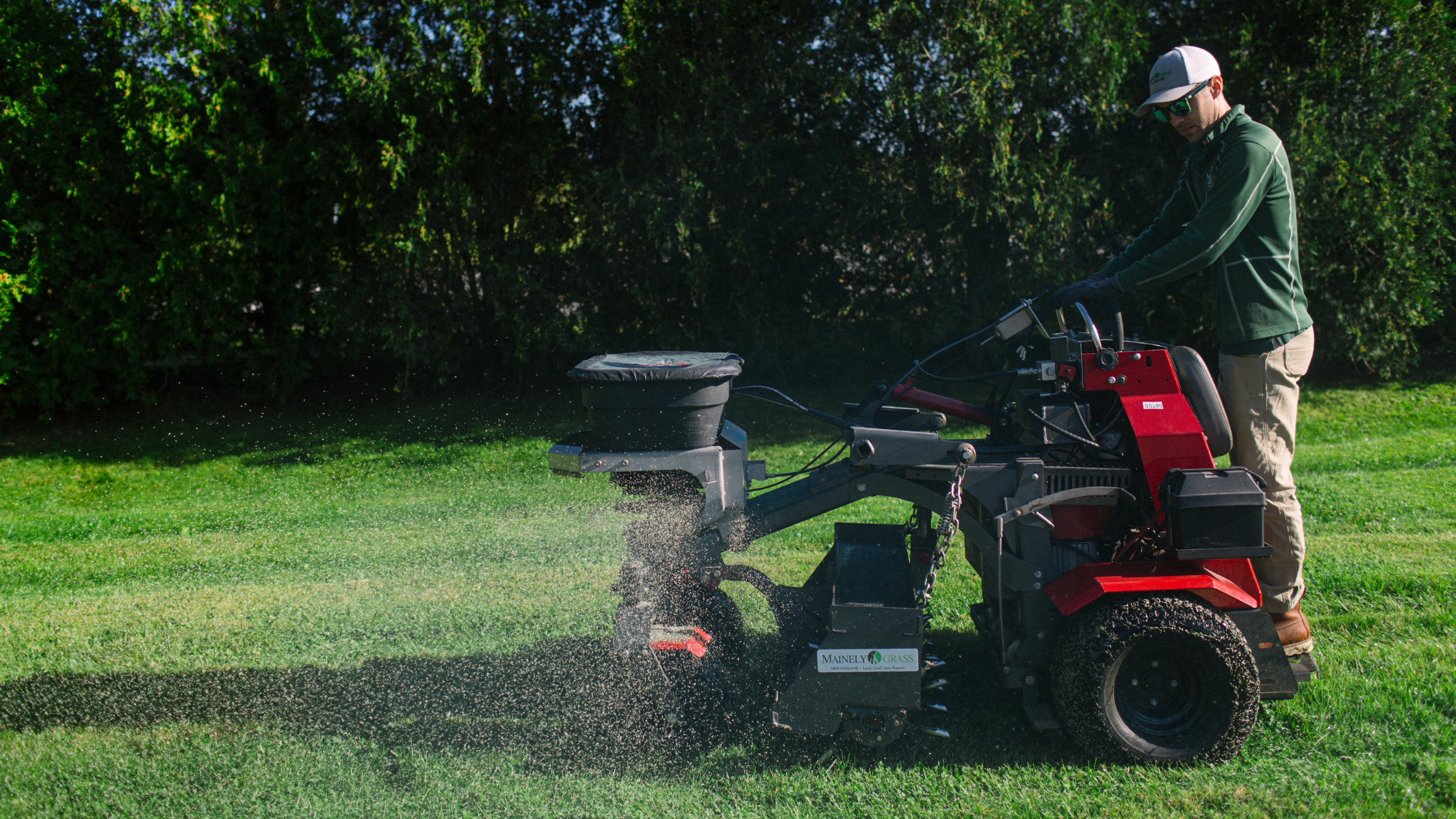
If your lawn isn't looking quite as full as it did in the spring, you're not alone.
Every summer, lawns across New England endure months of stress from heat, dry weather, foot traffic, pets, insects, and everyday wear. While some of that damage is easy to spot, much of it happens below the surface long before brown patches or bare spots appear.
The good news is that your lawn is about to enter the best growing season of the year.
Late summer and early fall provide ideal conditions for repairing summer damage and encouraging healthy new growth before winter. That's why this is the time of year lawn professionals recommend aeration and overseeding.
What Summer Does to Your Lawn
Even healthy lawns lose grass plants throughout the summer.
Periods of heat and drought force cool-season grasses into survival mode. Heavy foot traffic compresses the soil. Frequent mowing and changing weather conditions add additional stress.
Over time, these factors can lead to:
- Thin areas
- Slower growth
- Shallow root systems
- Soil compaction
- More opportunities for weeds to move in
Many homeowners don't notice the gradual decline until the following spring, when those thin areas become much more obvious.
Why Fall Is Different
Spring may seem like the obvious time to grow grass, but fall is actually much more forgiving.
The soil remains warm from the summer, allowing seed to germinate quickly, while cooler daytime temperatures reduce stress on young grass. Fall also tends to bring more consistent moisture and less competition from annual weeds like crabgrass.
That combination creates excellent conditions for establishing new turf before winter dormancy.
What Aeration Actually Does
One problem lawns can face is compacted soil. When soil becomes compacted, water, oxygen, and nutrients have a harder time reaching the root system.
Aeration helps relieve that compaction by removing thousands of small plugs of soil throughout the lawn.
Think of it like loosening packed soil in a garden. Creating those openings allows roots to breathe, absorb water more efficiently, and grow deeper over time.
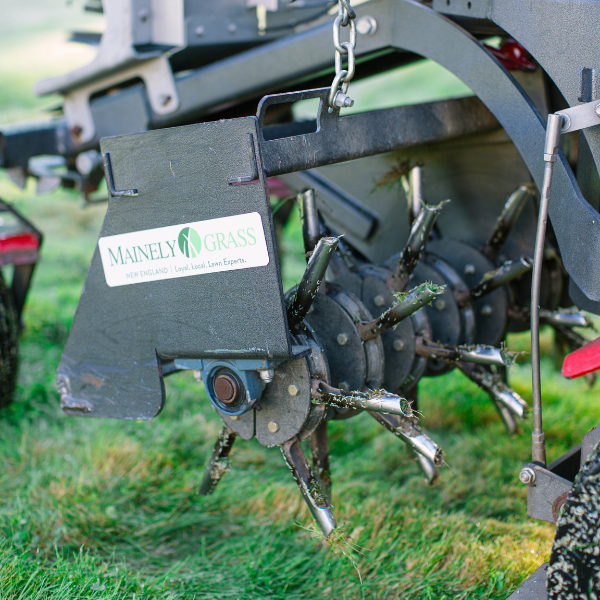 A close-up of a core aeration machine.
Why Overseeding Matters
Grass doesn't live forever.
Every year, there is some natural die-off from heat, insects, disease, drought, or everyday wear. Overseeding helps replace those lost plants before thin areas become larger problems.
By introducing new grass into the existing lawn, overseeding can help create a fuller, thicker stand of turf over time.
A thicker lawn also leaves less room for weeds to establish naturally.
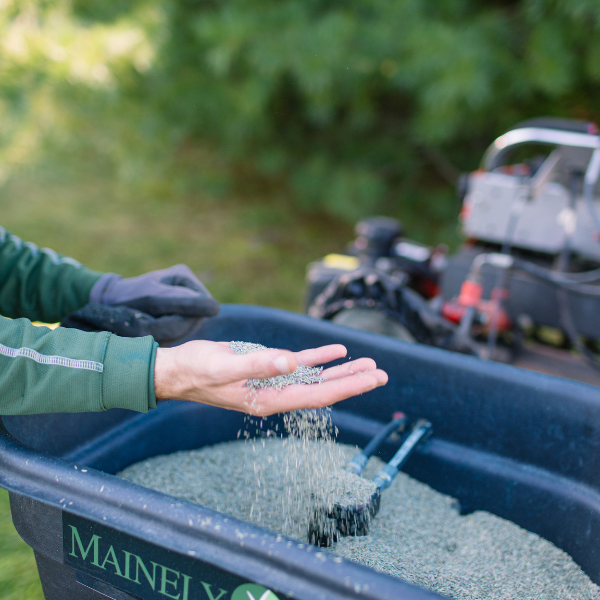 New seed ready to be overseeded into a lawn.
Five Signs Your Lawn Could Benefit from Aeration
Your lawn may benefit from aeration and overseeding if you notice:
- Water pooling after rainfall
- Soil that feels hard when you walk across it
- Thin or bare patches
- Increased weed pressure
- Heavy foot traffic from kids or pets
These are all common signs that the lawn could use some help.
What to Expect After Aeration
Immediately after aeration, you'll notice small soil plugs scattered across the lawn. While they may not look attractive, they're an important part of the process and will naturally break down over the next couple of weeks.
If your lawn is overseeded, keeping the seed consistently moist during germination is one of the most important steps you can take. Light, frequent watering is typically recommended until the new grass becomes established.
Your lawn can still be used, but minimizing heavy traffic on newly seeded areas will give young grass the best opportunity to grow.
 New seed establishing in a lawn.
The Biggest Mistake Homeowners Make
One of the most common mistakes we see is waiting too long to think about fall lawn care.
Aeration and overseeding have a relatively short seasonal window. Scheduling early gives new grass more time to establish before colder temperatures arrive and helps ensure the work can be completed during ideal growing conditions.
Frequently Asked Questions
Does aeration damage my lawn?
No. Removing small plugs of soil temporarily disturbs the surface, but it helps relieve compaction and encourages healthier root growth.
Should I leave the soil plugs on the lawn?
Yes. They naturally break down and return valuable organic matter and nutrients back into the soil.
Is fall better than spring for overseeding?
For most cool-season lawns in New England, yes. Warm soil, cooler air temperatures, and reduced weed competition make fall one of the best times to establish new grass.
How often should I overseed my lawn?
Ideally, if possible, an annual overseeding is one of the most beneficial things you can do for your lawn.
How long before I see results?
You'll often notice some improvement during the fall, but the biggest difference is usually seen the following spring after new grass has had time to establish. New turf growth is usually noticeable after two weeks.
Ready to Give Your Lawn Its Best Chance for Next Spring?
Aeration and overseeding aren't about creating an instant transformation. They're about helping your lawn recover from summer stress, strengthening the soil beneath it, and setting the stage for healthier growth next season.
If your lawn has become thin, compacted, or worn over the summer, fall is the best opportunity to help it bounce back.
