

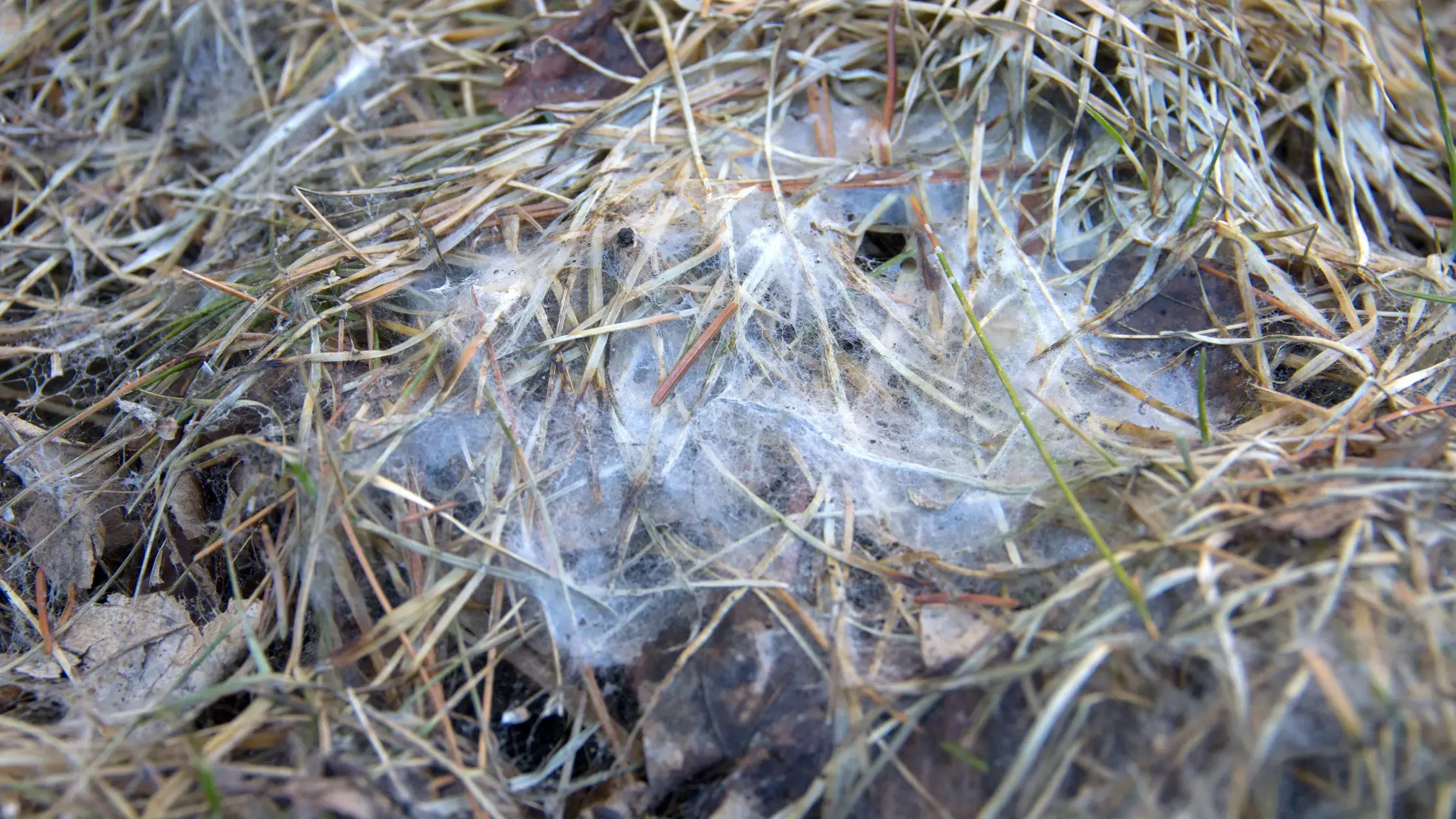
When the snow melts in early spring, many homeowners notice strange gray or pink patches on their lawn. It can look alarming,but in most cases, it’s a common lawn condition called snow mold.
The good news? Most lawns recover quickly with a little help.
Let’s walk through what snow mold is, why it happens, and what you can do to get your lawn back on track.
What Is Snow Mold?
Snow mold is a fungal disease that develops on lawns during winter. It thrives in cool, damp conditions under prolonged snow cover, especially when temperatures hover near freezing.
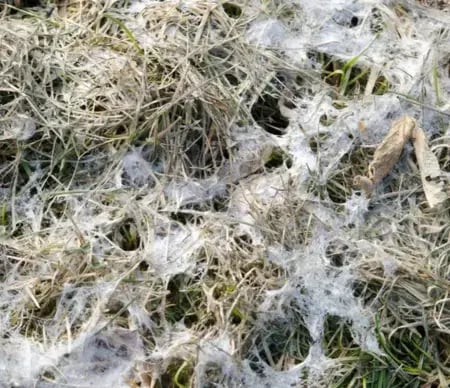
When the snow melts, the fungus becomes visible as circular patches of matted, discolored grass. These patches may appear gray, white, tan, or slightly pink depending on the type of fungus involved.
Although it can look severe, most cases affect only the grass blades and not the roots—meaning the lawn usually recovers once the weather warms and the grass starts growing again.
Why Snow Mold Happens
Snow mold forms when a few common winter conditions combine.
Typical causes include:
- Long periods of snow cover that trap moisture on the lawn
- Cool temperatures near freezing, which allow fungi to grow
- Thick thatch or debris that holds moisture against the grass
- Poor air circulation or drainage in shaded or compacted areas
These conditions create the perfect environment for fungal growth while the lawn is dormant.
The Two Most Common Types of Snow Mold
In regions like New England, homeowners usually encounter gray snow mold or pink snow mold.
Gray Snow Mold
Gray snow mold is the more common and usually the less damaging type.
You’ll typically see:
- Light gray or whitish patches
- Matted grass blades
- Damage limited mostly to the surface of the lawn
Because it rarely affects the roots, the grass often bounces back quickly once it dries out.
Pink Snow Mold
Pink snow mold is less common but more aggressive.
It can appear as:
- Pink or reddish patches with fuzzy edges
- Wet, matted grass
- Damage that sometimes extends deeper into the plant
Unlike gray snow mold, pink snow mold can continue spreading even after the snow melts if conditions remain cool and wet.
How to Treat Snow Mold in the Spring
If your lawn has snow mold, the best approach is usually simple lawn care. Start with these steps:
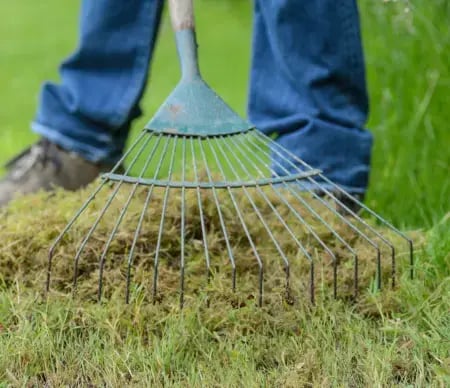
1. Gently rake the affected areas
Light raking helps lift matted grass and allows air and sunlight to reach the soil.
2. Improve air circulation
Clearing debris and opening up the turf helps the lawn dry faster.
3. Let the lawn dry out
Avoid excessive watering until the grass begins actively growing.
In most cases, lawns begin recovering naturally once temperatures warm and the soil dries out.
Preventing Snow Mold Next Winter
While snow mold can’t always be avoided, a few fall lawn care practices can reduce the risk.
Helpful prevention steps include:
- Continue mowing until grass stops growing for the season
- Avoid leaving heavy layers of leaves on the lawn
- Prevent thick thatch buildup
- Improve drainage and soil health with aeration
These practices help your lawn enter winter healthier and less prone to fungal issues.
A Healthy Lawn Is Resilient
Seeing snow mold after winter can be frustrating, but it’s rarely a long-term problem. With a little spring cleanup and proper lawn care, most lawns recover quickly.
