

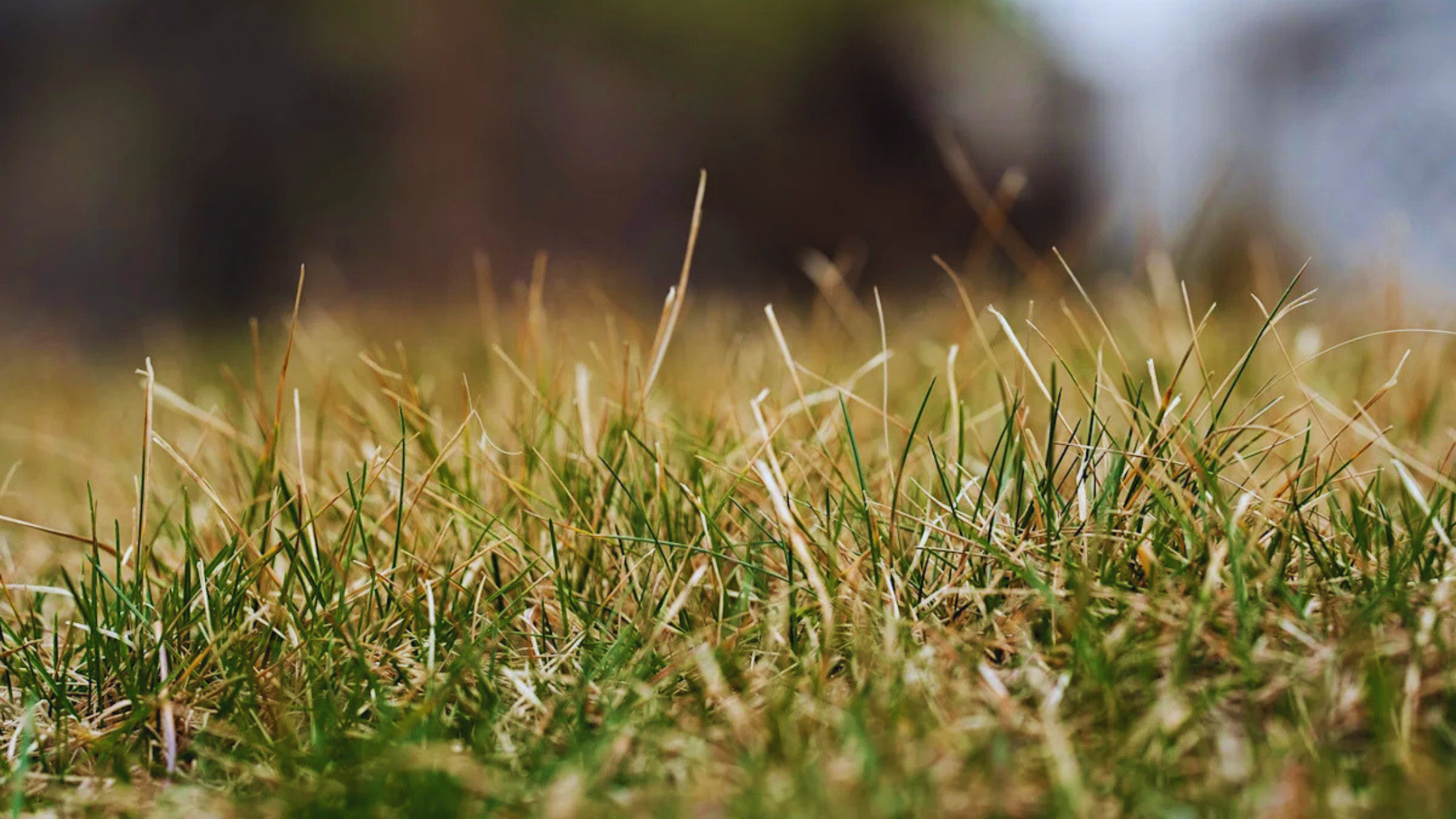
As much of New England continues to experience below-normal rainfall, when drought conditions combine with summer heat, cool-season lawns begin experiencing significant stress.
The important thing to remember is that heat alone usually isn't the problem. It's heat plus a lack of available moisture that causes turf to slow its growth, lose color, and eventually enter dormancy.
Understanding what's happening beneath the surface can help you avoid making well-intentioned mistakes that often make the problem worse.
Why This Year's Drought Matters
Many homeowners think of drought as something that only matters once the lawn turns brown. In reality, drought stress begins much earlier.
As soil moisture declines, grass plants begin conserving water and slowing growth. Root systems become less active, nutrients are taken up less efficiently, and the lawn becomes more vulnerable to traffic, insects, and disease.
Even lawns that still appear relatively healthy may already be under significant stress. That's why how you care for your lawn during extended dry periods matters just as much as how much rain eventually falls.
The Worst Thing to do During a Heatwave
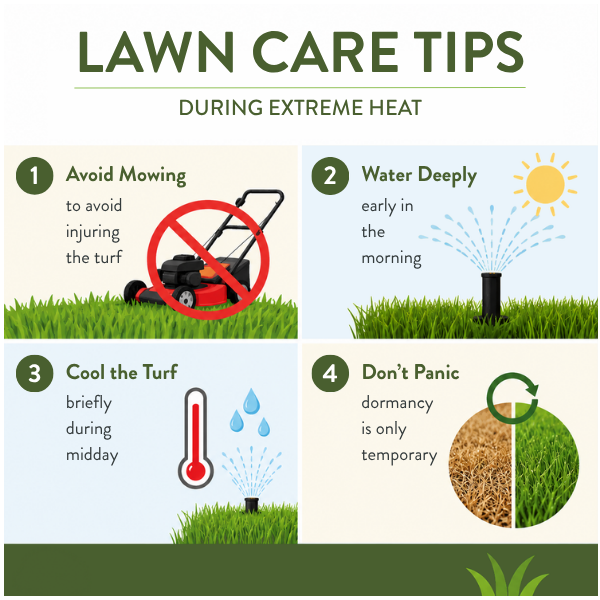
One of the worst things you can do during extreme heat is mow your lawn.
Every time you mow, you're asking the grass plant to recover from a small amount of stress. Under normal conditions, that's not a problem. During a heatwave, however, the plant is already working hard simply to survive.
Mowing also removes some of the grass blade that naturally shades the soil. Less shade means higher soil temperatures and faster moisture loss. On lawns that are already wilting, even walking or driving a mower across the turf can leave lasting footprints or tire tracks because the stressed plants can't bounce back as easily.
If your lawn has stopped growing because of heat, it's often best to simply let it rest until conditions improve.
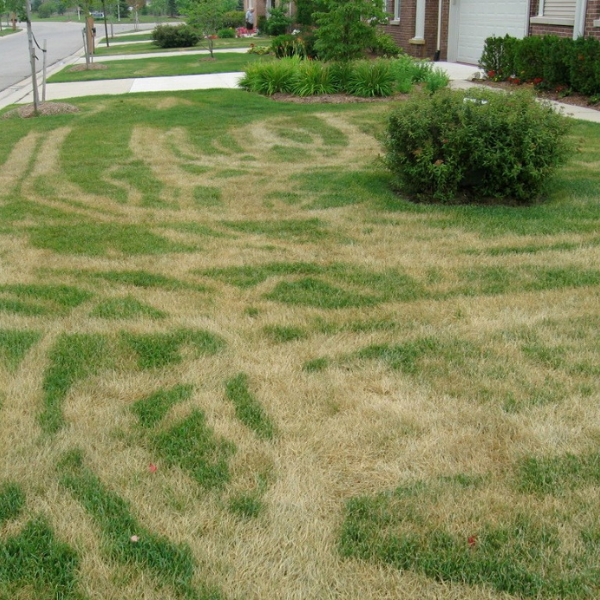 Heat tracking from lawn mower tires.
How to Water During a Heatwave
One of the most common questions we hear is whether you should water during the hottest part of the day.
Your primary watering should still happen early in the morning. Watering deeply once or twice a week encourages roots to grow deeper into the soil while reducing evaporation and disease pressure.
However, if your lawn is visibly wilting during the afternoon, running a very short irrigation cycle can temporarily cool the turf canopy and reduce stress. Think of it as cooling the grass—not watering the soil.
This quick cycle should never replace your normal deep watering schedule.
Is My Brown Lawn Dead?
In most cases, no. Lawns can often go 3 to 6 weeks before dying due to a lack of water.
Most brown lawns during prolonged heat are dormant, not dead.
Cool-season grasses commonly found throughout New England naturally enter dormancy when temperatures remain high and moisture is limited. Dormancy allows the plant to conserve energy until cooler weather and more consistent rainfall return.
The biggest mistake homeowners make is assuming brown means dead. Trying to force the lawn back to life with excessive watering or additional fertilizer can actually create new problems and place even more stress on the turf.
Patience is usually the best approach.
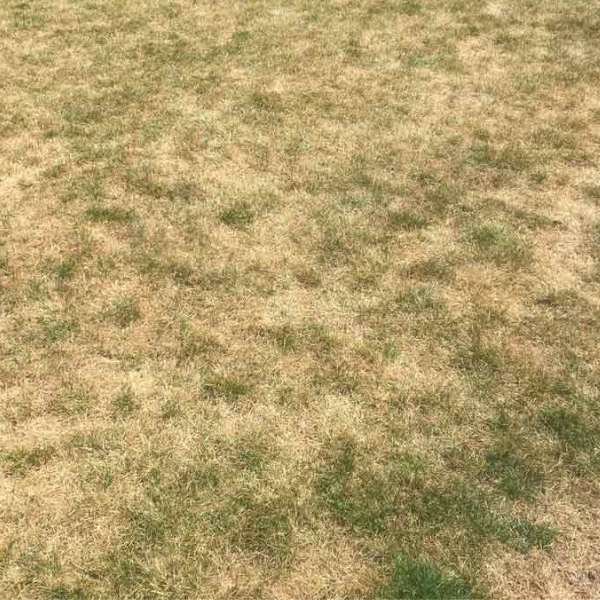 While it may look dead, this lawn is just dormant.
Helping Your Lawn Recover From a Heatwave
As temperatures moderate and rainfall returns, most healthy lawns begin recovering on their own.
Until then, focus on reducing stress instead of forcing growth.
- Mow only when necessary, and keep your mowing height higher than normal.
- Water deeply and infrequently in the morning.
- Limit heavy foot traffic when the lawn is wilted.
- Be patient. Dormancy is a natural survival response for cool-season turf.
A healthy lawn isn't one that never experiences stress. It's one with a strong enough root system to recover when better conditions return.
